သာသနာ့အလံ တီထြင္သူ အမွန္
(၁၈၈၅) ခုႏွစ္၊ ဧၿပီလ(၂၈)ရက္တြင္ (သီဟိုဠ္ကၽြန္း) သီရိလကၤာႏိုင္ငံတြင္
ကဆုန္လျပည့္ (ဗုဒၶေန႔)ကို ခမ္းနားႀကီးက်ယ္စြာ က်င္းပရန္ အထူးအစီအစဥ္ရွိ
ေနသည့္ ဗုဒၶေန႔ အထိမ္းအမွတ္ပြဲေတာ္ႀကီးႏွင့္ အျခား
ဘာသာေရးပြဲေတာ္မ်ားတြင္ပါ သာသနာ႔အလံေတာ္ကို အမွတ္တရ အျဖစ္လႊင့္ထူရန္
စဥ္းစားခဲ့ၾကသည္။ ထို႕ေၾကာင့္ ဗုဒၶဘာသာ၀င္ၿဖစ္ေသာ ကိုလံဘို
ၿမိဳ႕သူၿမိဳ႕သားတို႕သည္ မိရိုးဖလာ ကိုးကြယ္မႈအထိမ္း
အမွတ္အျဖစ္ ဗုဒၶအလံေတာ္ တစ္ခုကို တီထြင္ျပဳလုပ္ရန္အတြက္ ႀကိဳးပမ္းခဲ႔ၾက၏။
ထိုအလံေတာ္ကို (၁၈၈၅) ခုႏွစ္တြင္ျပဳလုပ္ခဲ့ေသာ္လည္း
ဗုဒၶအလံေတာ္ကို ကမာၻအရပ္ရပ္က အသိအမွတ္ ျပဳလာၾကသည္မွာ ႏွစ္ေပါင္း ၁၀၀
ေက်ာ္ခန္႕မွ်သာ ရွိေပေသးသည္။ ကမာၻ႕ဗုဒၶသာသနာ့အလံေတာ္အျဖစ္ (၁၉၅၁)
ခုႏွစ္သို႔ ေရာက္ေသာအခါမွသာ ကမာၻတစ္၀န္းလံုးတြင္ရွိေသာ
ဗုဒၶဘာသာ၀င္ႏိုင္ငံမ်ားမွ လက္ခံလာျခင္းျဖစ္သည္။
တီထြင္သူ အစစ္
(သာသနာ့အလံကို ကနဦး တီထြင္ေသာသူသည္ ဟင္နရီ စတီးလ္
အိုေကာ့ ( Henry Steele Olcott ) ဟု ထင္ေနၾကၿပီး အမွန္တကယ္မွာ စီ ပီ ဂုဏ၀ၯန
ေခၚ ကာရုိလစ္ ပူဂ်သ ဂုဏ၀ၯန (Carollis Pujitha Gune Wardene) ျဖစ္သည္။)
ဟင္နရီစတီးအိုေကာ့ ( H.S. Olcott )
ဟင္နရီစတီးအိုးေကာ့ သည္ အေမရိကန္ႏိုင္ငံသား
အၿငိမ္းစားဗိုလ္မွဴးၾကီး တစ္ဦးျဖစ္သည္။ ေအာလ္ေကာ့ကို ၁၈၃၂ခုႏွစ္၊
ဩဂုတ္လ၂ရက္ေန႔တြင္ နယူးဂ်ာစီျပည္နယ္၊ Orange ျမိဳ.၌ ပရိုတင့္စတင့္ခရစ္ယန္
မိဘႏွစ္ပါးမွ ေမြးဖြားခဲ့သည္။ အသက္(၂၉) ႏွစ္တြင္ အေမရိကန္ျပည္တြင္းစစ္
အတြင္းတပ္မေတာ္သို႕၀င္ေရာက္အမႈထမ္းခဲ့ၿပီးဗိုလ္မွဴးၾကီးအျဖစ္အျငိမ္းစား ယူခဲ့သည္။
အေတြးအေခၚသမိုင္းႏွင့္ ႏိုင္ငံေရးနယ္ပယ္ မွာထင္ရွားသူ ျဖစ္ၿပီး
သီအိုဆိုဖီပညာမ်ားကို ေလ့လာလိုက္စား၍ တစ္စတစ္စ ဗုဒၶ၀ါဒမ်ားကို
လိုက္စားရင္းမွ ဗုဒၶဘာသာ၀င္တစ္ဦး ျဖစ္လာခဲ့သူပင္။
၁၈၆၁ခုႏွစ္ အေမရိကန္ ျပည္တြင္းစစ္တြင္
ေငြ၀ယ္ကၽြန္စနစ္ကို တိုက္ဖ်က္လိုေသာ တပ္မေတာ္မွ ပါ၀င္တိုက္ခိုက္ခဲ့သည္။
ေအာလ္ေကာ့ သီရိလကၤာႏိုင္ငံတြင္ ေရာက္ရိွေနစဥ္အခ်ိန္က ဗုဒၶဘာသာႏွင့္
ခရစ္ယန္ဘာသာတို. စကားရည္လုပြဲႀကီး က်င္းပေနသည့္အခ်ိန္ ျဖစ္သည္။
ဗုဒၶဘာသာဘက္မွ အရွင္ဂုဏာနႏၵဆရာေတာ္ႏွင့္ ခရစ္ယန္ဘက္မွ ဓမၼဆရာ မ်ား
၁၈၇၃ခုႏွစ္တြင္ ပနာဒူရျမိဳ.၌ ယွဥ္ၿပိဳင္ျခင္းျဖစ္သည္။
အကဲျဖတ္မွတ္တမ္းမ်ားအရ အရွင္ဂုဏနႏၵက အကိုးအကား ခိုင္လံုၿပီး
အရည္အေသြးသာေၾကာင္း သိရသည္။ ဤပြဲ ျဖစ္ပြားၿပီးေနာက္
ဗိုလ္မွႈးႀကီးေအာလ္ေကာ့သည္ သီရိလကၤာ၊ ေဂါေလ (Galle) ၌ တရား၀င္
ဗုဒၶဘာသာအျဖစ္ ေၾကျငာခဲ့သည္။ ၁၈၉၁ခုႏွစ္တြင္မႏၱေလးသို.လာေရာက္ၿပီး
သံဃာေတာ္မ်ားကို လာေရာက္ဖူးေျမာ္ ေသးသည္။
စီပီဂုဏ၀ၯန(C.P. Gune Wardene)
စီပီဂုဏ၀ၯန သည္ ၁၈၅၄-ခုႏွစ္၊ ေဖေဖာ္၀ါရီလ (၁၆)ရက္ေန႔တြင္
ဖြားျမင္သူျဖစ္သည္။ ထိုအခ်ိန္ကာလက သီဟိုဠ္တြင္ ခရစ္ယာန္သာသနာ
လႊမ္းမိုးေနခ်ိန္ျဖစ္သည္။ ထို႔ေၾကာင့္ ဗုဒၶဘာသာ ျပန္လည္ထြန္းကားေရး ႏွင့္
ဗုဒၶဘာသာ၀င္တို႔ ဆံုး႐ႈံးေနေသာ အခြင့္အေရးမ်ား ျပန္ရေရးအတြက္ “ဗုဒၶသာသနာ
ကာကြယ္ေရး ေကာ္မတီ” ကို ၁၈၈၄-ခုႏွစ္ ဇန္န၀ါရီ(၂၇)ရက္ေန႔ တြင္
ထူေထာင္ခဲ့သည္။ ထိုအသင္းတြင္ ဟင္နရီစတီး
အိုးေကာ့ က စီပီဂုဏ၀ၯန ကို အက်ဳိးေတာ္ေဆာင္ အျဖစ္ ခန္႔အပ္သည္။ စီပီဂုဏ၀ၯန
သည္ ဗုဒၶသာသနာ ျပန္လည္ထြန္းကားေရးအတြက္ ႏွစ္ေပါင္း
(၄၀)ခန္႔အင္တိုက္အားတိုက္ ေဆာင္ရြက္ခဲ့ေလသည္။
စီပီဂုဏ၀ၯန က “ခရစ္ယာန္ဘာသာ၀င္မ်ား အတြက္ ၾကက္ေျခနီ
အထိမ္းအမွတ္ ရွိသကဲ့သို႔ ကမာၻ႔ဗုဒၶ သာသနာ၀င္ အားလံုး အသံုးၿပဳႏိုင္ရန္
အလံေတာ္ကို ဗုဒၶႏွင့္ သက္ဆိုင္သည့္ ေရာင္ျခည္ေတာ္ ေျခာက္ပါး ပါေသာ
အေရာင္တို႔ကို အသံုးျပဳရန္” အၾကံေပး တင္ျပခဲ႔သည္။ ၎ အၾကံေပး တင္ျပေသာ
ဗုဒၶသာသနာ့ အလံကို ၁၈၈၅-ခုႏွစ္ ကဆုန္လျပည့္(ဗုဒၶေန႔)၌ တင္ရန္ ေကာ္မတီ၀င္
အားလံုးက လက္ခံခဲ႔ႀကသည္။ ၎အလံပံုစံကို သရသ၀ိ သႏၵေရသ ( Sarasavi Sandaresa )
စာေစာင္တြင္ အခ်ပ္ပိုထည့္၍ ၁၈၈၅-ခုႏွစ္၊ ဧၿပီလ(၁၇)ရက္ တြင္ ေဖာ္ျပခဲ့သည္။
သို႔ေသာ္ ထုိစဥ္က အလံပံုစံ တီထြင္သူ၏ အမည္ကို မေဖာ္ျပခဲ့ေခ်။ သို႔ေသာ္
စီပီဂုဏ၀ၯန ကြယ္လြန္ၿပီးေနာက္ ႏွစ္ႏွစ္အၾကာ ၁၉၂၈-ခုႏွစ္၊ ေမလ(၁)ရက္ေန႔ထုတ္
သုဒနမိန စာေစာင္ႏွင့္ ကိုလံဘို ဗုဒၶသာသနာ သီအိုဆိုဖီ အသင္း
ရာျပည့္စာေစာင္တြင္ ဗုဒၶသာသနာ့ အလံ တီထြင္ေရးဆြဲသူမွာ စီပီဂုဏ၀ၯန
ျဖစ္ေၾကာင္း ေဖာ္ျပခဲ့သည္။
ထို႔ျပင္ ဟင္နရီစတီးအိုးေကာ့ ကိုယ္တိုင္ကလည္း
သူ၏မွတ္တမ္းေဟာင္း စာမ်က္ႏွာ( ၄၆၉ ) ၌ “ဗုဒၶသာသနာ့ အလံ တီထြင္ေရးဆြဲသူမွာ
သူမဟုတ္ေၾကာင္း” ထုတ္ေဖာ္ ၀န္ခံထားခဲ႔သည္။ အလံလႊင္႔တင္ရာ (ဗုဒၶေန႔)တြင္
အိုးေကာ့မွာ အိႏၵိယႏိုင္ငံသို႔ ေရာက္ေနခဲ႔ၿပီး ၁၈၈၆-ခုႏွစ္၊
ဇန္န၀ါရီလ(၂၈)ရက္တြင္ သီဟိုဠ္သို႔ ျပန္လည္ေရာက္မွ သာသနာ့ အလံကို ဦးစြာ
ျမင္ဖူးျခင္း ျဖစ္သည္။ သို႔ေသာ္ အလံမွာ အနည္းငယ္ ရွည္လ်ားေနသျဖင့္
အမ်ဳိးသား အလံမ်ားကဲ့သို႔ အခ်ဳိးအစားက်ေအာင္ ေဆာင္ရြက္ရန္
အၾကံေပးခဲ့သည္သာရွိ၏။
ျမန္မာႏိုင္ငံ ႏွင့္ သာသနာ့အလံ
သာသနာ့အလံေတာ္ကို သီဟိုဠ္ ဂိုဏ္းခ်ဳပ္ ဆရာေတာ္ အရွင္သီရိ
သုမဂၤလာေထရ္ သည္ ၁၉၅၀ ျပည့္ႏွစ္တြင္ သီဟိုဠ္ႏိုင္ငံလံုးဆိုင္ရာ ဗုဒၶသာသနာ
ကြန္ဂရက္ အဖြဲ႕ႀကီး၏ ဥကၠဌ ေဒါက္တာဂ်ီပီမာလာ
ေဆေထရ္ ၏ ဆႏၵအရ ကမာၻလံုးဆိုင္ရာ ဗုဒၶသာသနာ ကြန္ဂရက္ အစည္းအေ၀းႀကီးကို
ဖိတ္ေခၚ၍ အစည္းအေ၀းျပဳလုပ္ ခဲ့သည္။ ျမန္မာႏိုင္ငံတြင္ (၁၉၅၆) ခုႏွစ္
ဆဌသဂၤါယနာ တင္သည့္ေန႕မွစ၍ အထက္ပါ ကမာၻ႕ ဗုဒၶသာသနာ့အလံေတာ္ ကို
သာသနာ့အလံေတာ္ၾကီး အျဖစ္ ေအာင္ျမင္စြာ
အတည္ျပဳလႊင့္ထူႏိုင္ခဲ့ေလသည္။ ၁၉၈၀ျပည့္ႏွစ္တြင္ က်င္းပသည့္ သာသနာေတာ္
သန္႕႐ွင္းတည္တံ့ျပန္႕ပြားေရး ဂိုဏ္းေပါင္းစံု သံဃအစည္းအေ၀းမွလည္း
ဗုဒၶသာသနာ့ အလံေတာ္ႏွင့္ ပတ္သက္၍ အညီအၫြတ္ဆံုးျဖတ္ၿပီး သံဃနာယက
လက္စြဲက်မ္းတြင္ ျပ႒ာန္း ခဲ့သည္။
အလံေတာ္ အဓိပၸါယ္
သာသနာ့အလံေတာ္ႀကီးသည္ ျငိမ္းခ်မ္းသာယာျခင္း၊
သည္းခံျခင္း၊ စိတ္ထားျဖဴစင္ျခင္းတို႕၏ အထိမ္းအမွတ္ အၿဖစ္ သရုပ္ေဖာ္ထားၿပီး
ဗုဒၶဘာသာ၀င္တို႕သည္ ဘုရားရွင္အားအထူးၾကည္ညိဳၾကသျဖင့္ ဘုရားရွင္၏
ေရာင္ျခည္ေတာ္ ေျခာက္သြယ္ ကြန္႔ျမဴးကာ တရားေတာ္မ်ား
ေဟာၾကားေနေတာ္မူခဲ႔သည္ကို ရည္ညြန္းႀကၿခင္းၿဖစ္၏။ ထို႔ေၾကာင့္ ေရာင္ျခည္ေတာ္
ေျခာက္သြယ္ အေရာင္ကို အသံုးၿပဳရန္ ဆုံးၿဖတ္ခဲ႔ၿခင္း
ၿဖစ္ပါသည္။
အရြယ္အစား/အေရာင္
• အႀကီး = အလ်ား - ၉ေပ x အနံ - ၅ေပ
• အလတ္ = အလ်ား - ၄ေပ ၆လက္မ x အနံ - ၂ေပ ၆လက္မ
• အလတ္ = အလ်ား - ၂ေပ ၃လက္မ x အနံ - ၁ေပ ၃လက္မ
• အေသး = အလ်ား - ၉လက္မ x အနံ - ၅လက္မ ဟူ၍ ေလးမ်ဳိး သတ္မွတ္ထားသည္။
ေရာင္ျခည္ေတာ္ ေျခာက္သြယ္ သတ္မွတ္ျပ႒ာန္း ထားသည့္အတိုင္း အလံေတာ္တိုင္ဘက္မွ စတင္၍ သတ္မွတ္ရသည္ရွိေသာ္
1. နီလ = အျပာရင့္ေရာင္
2. ပီတ = အ၀ါရင့္ေရာင္
3. ေလာဟိတ = အနီေရာင္
4. ၾသဒါတ = အျဖဴေရာင္
5. မဥၨီ႒ = ပန္းႏုေရာင္္ ထိုအေရာင္(၅)မ်ဳိးကို ေဒါင္လိုက္ထားရွိၿပီးလွ်င္-
6. ပဘႆရ = ၿပိဳးၿပိဳးျပက္ျပက္ တစ္ခဲနက္ ထြက္ေနေသာ အေရာင္ အျဖစ္ အလံေတာ္၏
အစြန္အဖ်ား(အထက္)အေပၚဘက္မွ ေန၍ အျပာ၊ အ၀ါ၊ အနီ၊ အျဖဴ၊ ပန္းႏုေရာင္
တို႔ကိုပင္ အစဥ္အတိုင္း ေအာက္ဖက္သို႔ ထားရွိခ်ဳပ္လုပ္ရမည္။
အသံုးျပဳပံု
ျမန္မာႏိုင္ငံရွိ ႏိုင္ငံေတာ္သံဃ မဟာနာယက အဖြဲ႕သည္ အလံေတာ္ကို သံဃနာယက
လက္စြဲ၊ အပိုဒ္(၅)၊ အခန္း(၂၉) ၌ သာသနာ့အလံေတာ္ အခန္း အပိုဒ္(၃၅၅)၌
အသံုးျပဳရမည့္ေန႕ရက္မ်ား သတ္မွတ္ထားသည္မွာ-
(က)အခါႀကီး ရက္ႀကီးမ်ား
1. ကဆုန္လျပည့္ (ဗုဒၶေန႔)
2. နယုန္လျပည့္ (မဟာသမယေန႔)
3. ၀ါဆိုလျပည့္ (ဓမၼစၾကာေန႔)
4. ၀ါေခါင္လျပည့္ (ေမတၱာ အခါေတာ္ေန႔)
5. ေတာ္သလင္းလျပည့္ (ဂရုဓမၼ အခါေတာ္ေန႔)
6. သီတင္းကၽြတ္လျပည့္ (အဘိဓမၼာ အခါေတာ္ေန႔)
7. တန္ေဆာင္မုန္းလျပည့္ (သာမညဖလ အခါေတာ္ေန႔ )
8. တပို႔တြဲလျပည့္ (ၾသ၀ါဒ ပါတိေမာက္ အခါေတာ္ေန႔)
(ခ)ပြဲေတာ္ႏွင့္ အခမ္းအနားမ်ား
1. ၀ါဆိုပြဲေတာ္ အခမ္းအနား
2. အဘိဓမၼာအခါေတာ္ေန႔
3. ကထိန္ပြဲေတာ္
4. ရဟန္းခံရွင္ျပဳပြဲ
5. ဆြမ္းႀကီးေလာင္းလွဴပြဲ
6. စာျပန္ပြဲ ႏွင့္ ဘြဲ႕ႏွင္းသဘင္
7. နိကာယစာေမးပြဲ၊ တိပိဋကစာေမးပြဲႏွင့္ ပူေဇာ္ပြဲ
8. ခြင့္ျပဳခ်က္ရ႐ိွၿပီးသည့္ တရားပြဲမ်ား
9. ဘုရားထီးတင္ပြဲ
10. ဗုဒၶပူဇနိယပြဲေတာ္
11. အသံမစဲ ပ႒ာန္းရြတ္ဖတ္ ပူေဇာ္ပြဲ
12. သံဃာ့အစည္းအေ၀း
13. သံဃ၀ိနိစၦယအဖြဲ႕ စစ္ေဆး ဆံုးျဖတ္ရာဌာန
14. ဘာသာေရး၊ သာသနာေရးႏွင့္ စပ္ဆိုင္ေသာ သင္တန္းမ်ားတို႔ တြင္ အသုံးၿပဳနိုင္သည္။
(ဂ)လႊင့္ထူ အသံုးျပဳနည္း၊ အပိုဒ္(၃၅၈)
အထိမ္းအမွတ္အလံအားလံုး၏ အလယ္တြင္ ျဖစ္ေစရမည္။ လက္ယာအစြန္းမွ အေရာင္ငါးမ်ိဳး
ေရာယွက္ေရာင္တြင္ အျပာရင့္ေရာင္သည္ အေပၚတြင္လက်္ာဘက္႐ိွေနေစရမည္။
ေမာ္ေတာ္ယာဥ္တြင္ စိုက္ထူပါက ကားႀကီးမ်ား၏ အမိုးအေ႐ွ႕ပိုင္းတြင္ ျဖစ္ရမည္။
ကားငယ္မ်ားတြင္ လက္ယာဘက္ အေ႐ွ႕ပိုင္းတြင္ ျဖစ္ရမည္။ သံဃာမ်ားကို
ႀကိဳဆိုသည့္အခါ သံဃာပါလာသည့္အခါတြင္သာ တပ္ဆင္ရမည္ဟူ၍ ေဖာ္ျပ ထားသကဲ့သို႕၊
(ဃ)ေရွာင္ၾကဥ္ရမည့္အခ်က္မ်ား၊ အပိုဒ္(၃၉၅)
1. ရဟန္းသံဃာပါသည္ျဖစ္ေစ၊ မပါသည္ျဖစ္ေစ မည္သည့္ဘုရားဖူးယာဥ္တြင္မွ မသံုးစြဲရ။
2. လမ္းေဘး၊ လမ္းခြ၊ ယာဥ္ဆိပ္၊ သေဘၤာဆိပ္မ်ားတြင္ မသံုးရ။
စူးရွေသာ စိတ္ကူးဥာဏ္ ရွိခဲ႔ေသာ စီ ပီ ဂုဏ၀ၯန( ေခၚ
)ကာရုိလစ္ ပူဂ်သ ဂုဏ၀ၯန (Carollis Pujitha Gune Wardene) အား
ဗုဒၶဘာသာ၀င္အားလုံးတို႔၏ ကိုယ္စား ေလးစားသမွဳ႕ ၿပဳအပ္ပါသည္။
အရွင္စေႏၵာဘာသ(ေရႊဘို)ေရးသားေသာ `သာသနာ့အလံေတာ္´ စာအုပ္နွင္႔ ဒီ၀က္ဆိုက္
(http://www.buddhistchannel.tv/index.php?id=43,4030,0,0,1,0) မွ
မွီၿငမ္းေရးသားပါသည္။
အရွင္သုနႏၵာလကၤာရ
The birth of the Buddhist flag
By D.C. Ranatunga, Sunday Times, April 29, 2007
Colombo, Sri Lanka -- In recent history, we
have not heard of Vesak full moon Poya day falling in April. Vesak has
always been celebrated in May. One hundred and twenty two years ago,
however, in 1885 Vesak Poya fell on April 28.
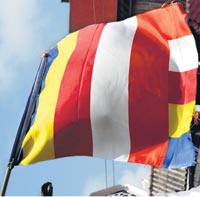 << The Buddhist flag: A blend of six colours believed to have been exhibited in the aura of the Buddha << The Buddhist flag: A blend of six colours believed to have been exhibited in the aura of the Buddha
A month earlier, on March 27, 1885, Governor Sir Arthur
Hamilton Gordon had issued a proclamation declaring Vesak Poya a
public holiday. It was the culmination of a campaign by the Buddhists
to get some of their lost rights back. The event called for
celebrations and the six-colour Buddhist flag flew high for the first
time on that historic Vesak day.
The Dutch had abolished the Vesak Poya holiday in 1770 and the
British had ignored requests that it be restored. Following the
arrival of Colonel Henry Steele Olcott in May 1880, the Buddhist
revivalist movement gathered momentum. A Buddhist Defence Committee
was formed on his initiative on January 28, 1884 following the
inaction by the government to deal with the culprits who attacked a
Buddhist procession at Kotahena, killing one person and seriously
injuring at least 30 persons.
The committee under the presidency of Muhandiram A.P. Dharma
Gunawardena met at the Vidyodaya Pirivena at Maligakanda. The other
members of the committee were Don Carolis Hewavitarana (Vice President),
Carolis Pujitha Gunawardena (Secretary) and H. A. Fernando
(Treasurer). Colonel Olcott was appointed an honorary member.
The committee considered several issues relating to the
injustices meted out to the Buddhists and at the inaugural meeting it
was resolved to ask the British government to take action on
identified issues. The resolution was proposed by Vice President Don
Carolis Hewavitarana supported by J.P. Jayatilake and was seconded by
H.A.Fernando.
At least six main issues were addressed in a memorandum
prepared to be sent to Lord Derby, Secretary to the State for Colonies
in London. These were:
- The need for the culprits of the Kotahena riots to be committed for trial.
- The British government should follow a policy of religious
neutrality or guarantee the religious rights and privileges of the
Sinhalese Buddhists.
- Vesak full moon Poya day be declared a holiday for Buddhist public servants.
- The removal of all restrictions on the use of national and
religious music and the restoration of the right to hold processions
which had been enjoyed by the Buddhists from time immemorial.
- The appointment of Buddhist Registrars of Marriages in Buddhist villages.
- The removal of anomalies and the formation of a proper management system for Buddhist temporalities.
Colonel Olcott undertook to go to London and personally meet
Lord Derby and discuss the issues raised. The Buddhist Defence
Committee decided to celebrate the historic announcement of the Vesak
holiday and a sub-committee comprising Venerable Hikkaduwe Sri
Sumangala Thera, Venerable Migettuwatte Gunanada Thera, Don Carolis
Hewavitarana, Muhandiram A.P. Dharma Gunawardena, William de Abrew,
Carolis Pujitha Gunawardena, Charles A. de Silva, N.S. Fernando, Peter
de Abrew and H. William Fernando was appointed to make the
arrangements.
A key item in the programme for celebrations was the ceremonial
hoisting of the Buddhist flag in the major temples in and around
Colombo.
The idea of designing a Buddhist flag was mooted by the Colombo
Committee organising the Vesak celebrations and was hailed by Colonel
Olcott who made the following observation in his 'Old Diary Leaves':
"It was at this time that our Colombo colleagues had the happy thought
of devising a flag which would be adopted by all Buddhist nations as
the universal symbol of their faith thus serving the same purpose as
that of the cross does for all Christians. It was a splendid idea and I
saw in a moment its far-reaching potentialities as an agent in that
scheme of Buddhist unity. Our Colombo brothers had hit upon the quite
original and unique idea of blending in the flag the six colours
alleged to have been exhibited in the aura of the Buddha."
Carolis Pujitha Gunawardena has been credited as the designer
of the flag which appeared for the first time in the Sinhalese
newspaper 'Sarasavi Sandaresa' on April 17, 1885. The design consisted
of the six colours 'nila' (sapphire blue), 'pita' (golden yellow),
'lohita' (crimson), 'odata' (white), 'manjesta' (scarlet) and
'prabhashvara' (mixture of the five).
The flag took the shape of a long streaming pennant which
Colonel Olcott commented would be "quite unsuitable for carrying in
processions or fixing in homes". He suggested that the flag should
take the shape and size of usual national flags. The proposal was
accepted. And thus was born the Buddhist flag which will be raised at
Buddhist homes on Tuesday, May 1, this year's Vesak full moon Poya
day.
|
The birth of the Buddhist flag (သာသနာ့အလံ တီထြင္သူ အမွန္) by Ashin Sunandalankara (အရွင္သုနႏၵာလကၤာရ) |




 Posts
Posts


